
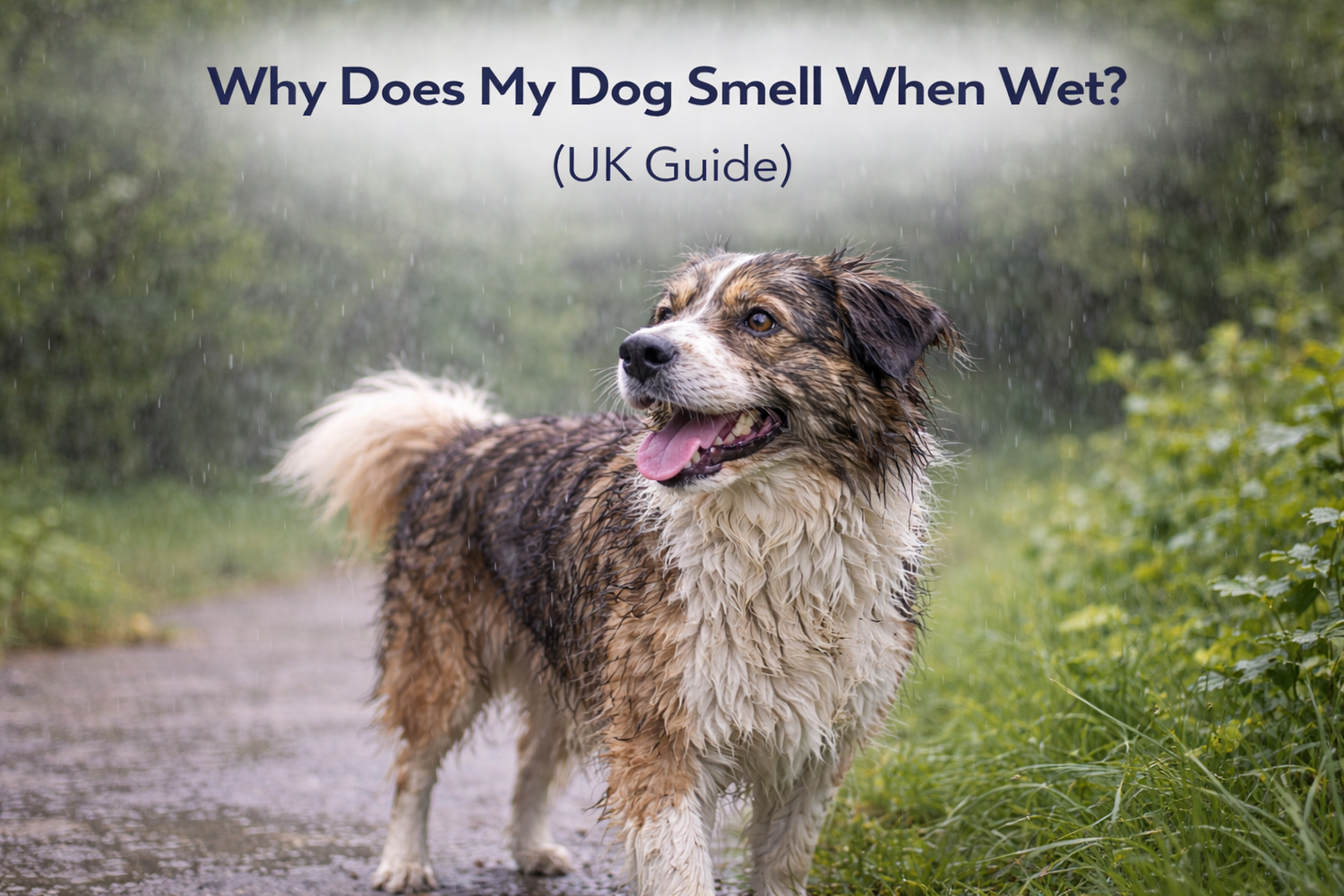
If you’ve ever noticed a strong odour after rain, bath time or swimming, you’re not alone.
“Wet dog smell” is one of the most common concerns for UK pet parents, particularly when the weather is damp.
At DotDotPet, we see wet dog smell most often during periods of increased moisture exposure, and it’s usually linked to coat structure and drying routines rather than cleanliness.
So why does it happen? And how do you manage it without relying on heavy perfume?
What Causes Wet Dog Smell?
Wet dog smell isn’t caused by water itself.
It happens when moisture interacts with:
- Natural oils in your dog’s coat
- Microorganisms normally present on the skin
- Trapped dirt and environmental debris
- Damp undercoat layers
As water evaporates, it releases these compounds into the air — creating the familiar odour.
The smell can be stronger in dogs with:
- Dense double coats
- Long or feathered coats
- Thick undercoats
- Inconsistent drying routines
Is Wet Dog Smell Worse in the UK?
The UK climate does plays a significant role.
Frequent exposure to:
- Rain
- Wet grass
- Muddy fields
- Damp pavements
- Coastal air
means coats are regularly exposed to moisture.
If coats aren’t dried thoroughly, lingering dampness, particularly in undercoats, allows odour to develop more strongly indoors or in cars.
For a structured drying approach, read:
👉 Post-Walk Dog Care Routine
Why Does My Dog Still Smell After a Bath?
If your dog smells even after washing, it may be due to:
- Incomplete rinsing
- Trapped undercoat moisture
- Harsh shampoos disrupting skin balance
- Heavy fragrance masking rather than cleansing
True freshness comes from proper cleansing and thorough drying — not stronger scent.
Dogs experience fragrance far more intensely than humans. Overpowering perfume can make grooming less comfortable without addressing the underlying cause.
Learn more here:
👉 Why Dogs Don’t Like Perfume
How to Get Rid of Wet Dog Smell on Your Dog
1. Choose a Balanced, SLS-Free Shampoo
Look for a shampoo that is:
- Prebiotic
- Free from SLS
- Free from artificial colours
- Hypoallergenic
- Suitable for regular use
- Designed with dog-specific fragrance
DotDotPet’s coat-specific shampoos are formulated to support skin balance during routine washing, helping reduce odour without relying on heavy perfume.
Explore the range here:
👉 Dog Shampoo Collection
2. Rinse Thoroughly
Shampoo residue can contribute to lingering odour.
Always rinse until water runs completely clear.
3. Dry Completely — Especially Undercoats
Damp undercoats are the main contributor to wet dog smell.
After bathing or wet walks:
- Towel dry thoroughly
- Check chest, belly and legs
- Feel beneath dense coats for trapped moisture
Eco Dog Towels are designed for practical, hygienic drying without storing damp reusable towels in cars or hallways.
How to Get Rid of Wet Dog Smell in the House
If your home smells after wet walks, focus on:
- Drying before entering living areas
- Washing bedding regularly
- Avoiding storage of damp towels
- Refreshing shared spaces thoughtfully
Rather than masking odour with strong home fragrance, use balanced deodorising sprays suitable for coat, bedding and shared environments.
Compare options here:
👉 Dog Deodorising Sprays Guide
How to Get Rid of Wet Dog Smell in the Car
Car interiors can trap moisture and odour quickly.
To reduce this:
- Use Eco Dog Drying towels rather than having damp towels in the boot
- Avoid storing damp fabric
- Allow airflow after wet journeys
- Lightly refresh upholstery with pet-appropriate deodorising spray
Managing moisture early prevents stronger odour later.
Does Wet Dog Smell Mean My Dog Is Dirty?
Not necessarily.
Wet dog smell is typically a natural reaction between moisture and coat oils.
However, persistent strong odour may suggest:
- Incomplete drying
- Coat type requiring more targeted care
- Product build-up
Managing wet dog smell is less about stronger fragrance and more about balanced cleansing and proper drying — an approach we prioritise across the DotDotPet range.
Quick Summary: How to Manage Wet Dog Smell
- Use prebiotic, SLS-free shampoo
- Avoid heavy perfume masking
- Rinse thoroughly
- Dry completely — especially undercoats
- Use a deodorising spray between washes
- Refresh shared spaces thoughtfully
Wet dog smell is common — but manageable with the right routine.
Final Thoughts
Wet dog smell isn’t about your dog being unclean. It’s about moisture interacting with natural coat oils and environmental debris.
With coat-appropriate cleansing, balanced fragrance and proper drying, particularly in the UK’s damp climate, odour can be significantly reduced without overwhelming scent.
Consistency matters more than intensity.


Dejar un comentario
Todos los comentarios se revisan antes de su publicación.
Este sitio está protegido por hCaptcha y se aplican la Política de privacidad de hCaptcha y los Términos del servicio.