
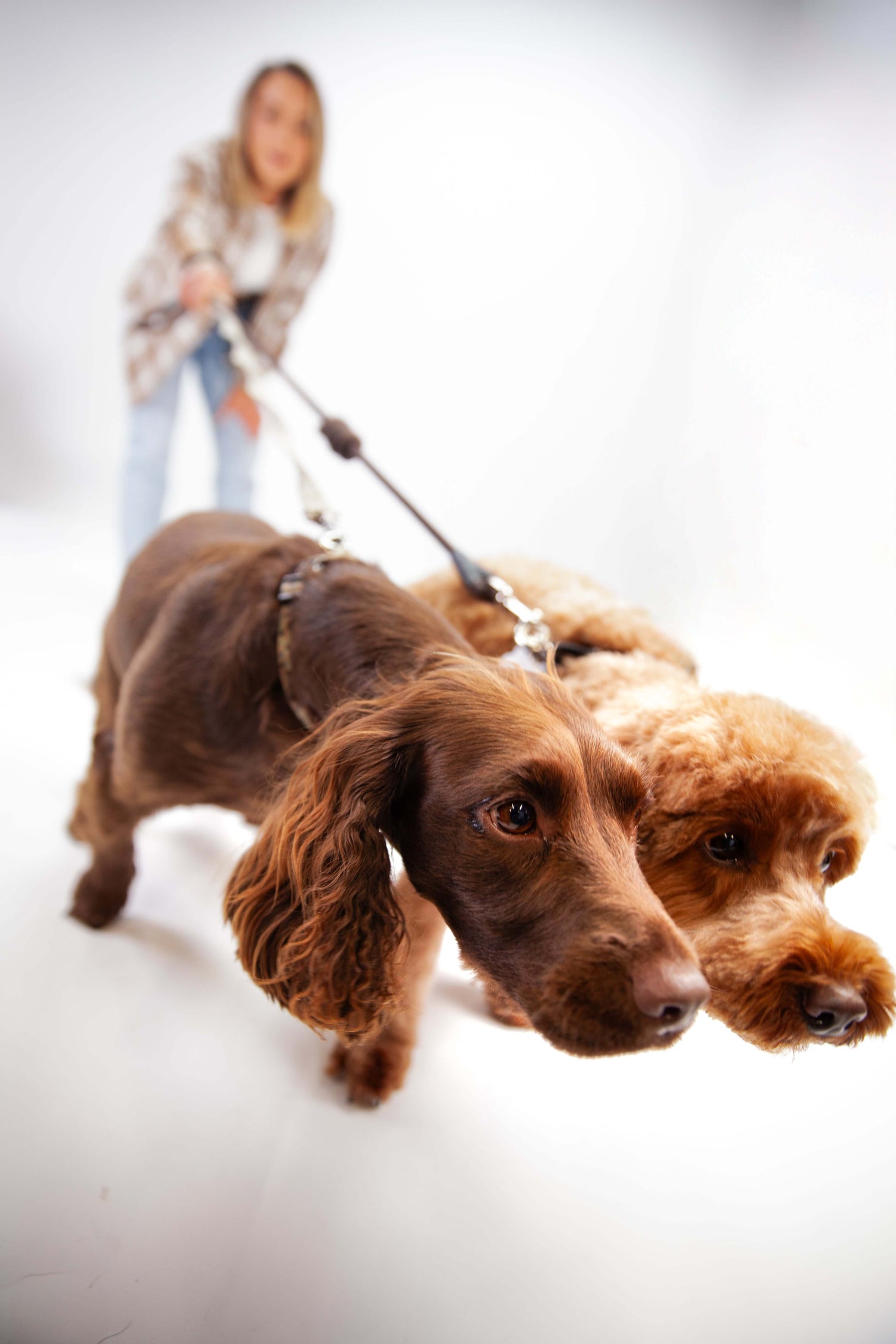
Why Does My Dog Pull, Stop or Sniff on Walks?
What It Really Means
Many dog owners picture walks as calm, steady, and predictable.
Then reality hits.
Your dog pulls ahead, stops suddenly, or sniffs absolutely everything. It can feel frustrating — or even worrying — especially if walks don’t look how you expected.
The good news? Most of these behaviours are completely normal.
Why dogs sniff so much on walks
Dogs experience the world primarily through smell. Sniffing helps them gather information, process emotions, and feel safe and oriented in their environment.
From a wellbeing point of view, sniffing is mentally enriching and often calming. A short walk with lots of sniffing can be more satisfying than a fast, uninterrupted one.
Is sniffing more important than distance?
Often, yes.
Covering lots of ground without stopping can be physically tiring but emotionally unfulfilling. Allowing sniffing supports emotional regulation, confidence, and calmer behaviour once back home.
Why dogs pull on the lead
Pulling is one of the most common walking challenges — and one of the most misunderstood.
Common reasons include excitement, frustration at being restrained, a faster natural walking pace than ours, or busy, overwhelming environments.
Pulling is rarely about stubbornness or disobedience. It’s often a sign that the environment is a lot for your dog to manage.
Why dogs stop suddenly on walks
When a dog stops, they’re usually communicating something.
This might be uncertainty or worry, sensory overload, tiredness, or discomfort. Stopping isn’t bad behaviour — it’s feedback. Pausing can be your dog’s way of asking for time or space.
What your dog’s walking behaviour is telling you
From a wellbeing‑led perspective, behaviour is information.
Pulling, stopping, and sniffing can reflect how safe, confident, or overwhelmed your dog feels in a particular situation. When walks feel challenging, small adjustments often help more than forcing perfect behaviour.
Supporting calmer walks through wellbeing
At DotDotPet, we think of walking behaviour as part of a dog’s wider emotional wellbeing — not something to fix in isolation. Understanding what your dog is communicating, and adapting walks to feel safer and calmer, is often more helpful than pushing for textbook behaviour.
This perspective is shaped by science‑led thinking and informed by work alongside organisations such as Battersea, where welfare and understanding always come before appearance.
When is it worth seeking advice?
Most walking behaviours are completely normal. It’s sensible to look for support if you notice sudden changes in behaviour, increasing reluctance to walk, or signs of pain or distress.
Trusted welfare organisations, including Battersea, offer clear, compassionate guidance for dog owners.
What a “good walk” really looks like
A good walk isn’t perfectly behaved or uninterrupted.
It’s one where your dog feels safe, can communicate, and comes home calmer than when they left. That’s the foundation of long‑term wellbeing — for dogs and their people.
That’s the foundation of long-term wellbeing. It is also about being prepared ensure you have all the accessories you need including DotDotPet's Eco Towels.


Leave a comment
All comments are moderated before being published.
This site is protected by hCaptcha and the hCaptcha Privacy Policy and Terms of Service apply.